
How to Identify Structural Foundation Damage in Your DFW Home
Foundation concerns can be unsettling because a crack, a sticky door, or a sloping floor may look small while raising a much larger question: is the home moving in a way that affects its structure? For Dallas Fort Worth homeowners, learning to separate everyday aging from meaningful movement is a practical first step. This guide explains the foundation damage signs Dallas Fort Worth homeowners should document, how to tell structural vs cosmetic cracks apart, and when an inspection is the sensible next move.
Not every crack means a foundation repair is necessary. Paint, drywall compound, concrete, wood trim, and masonry all respond to ordinary settling, temperature changes, moisture, and age. Structural foundation damage is different. It is a pattern of movement that can change how parts of the house fit and perform. The goal is not to diagnose a home from one symptom, but to recognize patterns early and get clear, property specific information.
Level Home serves homeowners across the Metroplex with evaluations and repair planning. If several signs are appearing together, begin with a professional foundation inspection for a DFW home. The observations below can help you have a more informed conversation and keep a useful record of what is changing.
What Makes Foundation Damage Structural?
Structural foundation damage DFW homeowners should take seriously involves movement that affects the building system, not merely a surface finish. A slab or pier and beam foundation supports walls, floors, roof loads, and openings. When differential movement occurs, meaning one portion moves differently from another, stress can show up throughout the home.
A cosmetic issue is usually limited to a finish material or a localized installation detail. A structural concern is more likely to be repeated, widening, directional, or accompanied by operational changes such as doors that no longer latch. Neither category should be judged by appearance alone. The location, shape, size, age, and progression of a crack all matter.
Cosmetic cracking versus structural movement
| Observation | Often cosmetic or routine | May indicate structural movement |
|---|---|---|
| Drywall crack | Fine, short hairline crack with no nearby change in trim or doors | Repeated diagonal crack from a window or door corner, especially if it widens or returns after patching |
| Concrete slab crack | Stable, hairline surface crack in a garage or patio with no displacement | Crack with one side visibly higher, spreading width, or related interior symptoms |
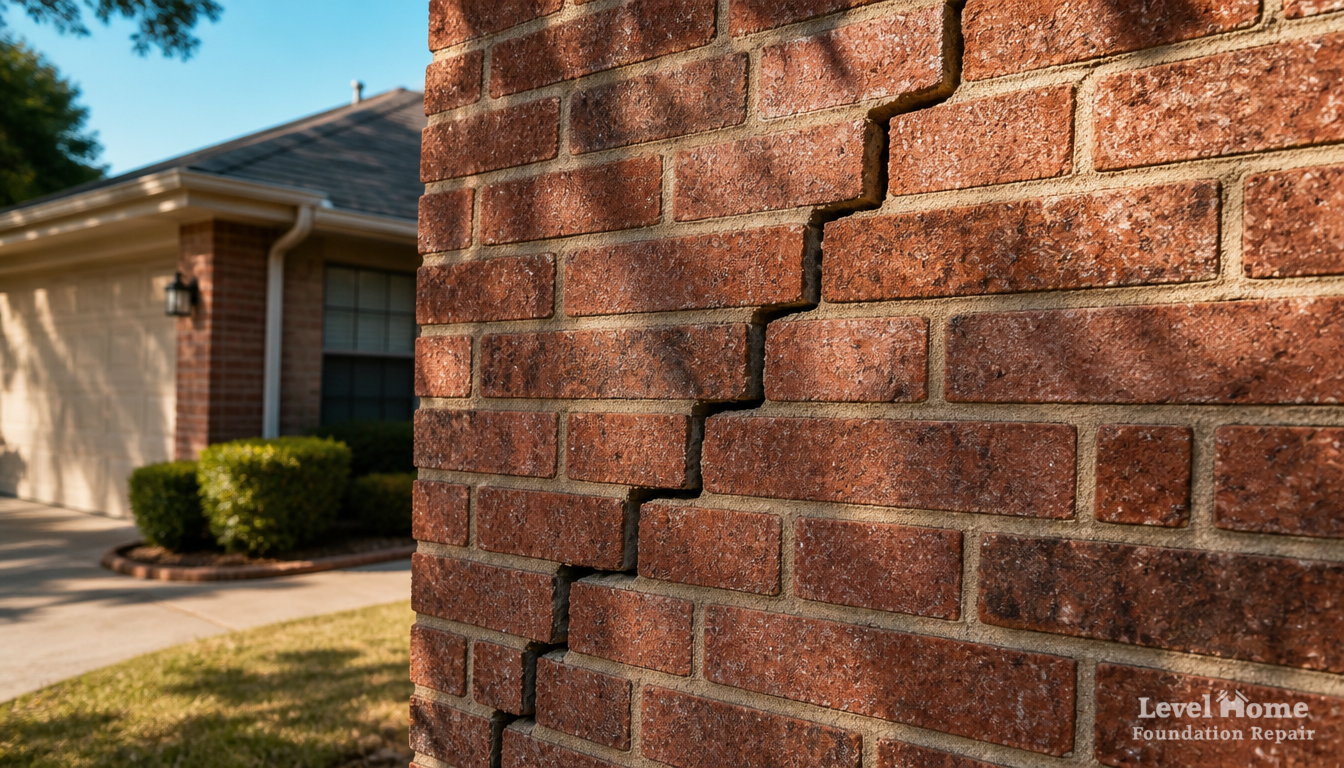
| Brick or masonry | Isolated mortar wear or a small stable surface defect | Stair step cracking, separation at corners, or a crack that crosses multiple courses |
| Doors and windows | One seasonal sticking door with an obvious hinge or hardware issue | Several openings binding, gaps around frames, or latches that no longer align |
| Floors | Minor variation common in an older home, unchanged over time | Noticeable new slope, soft areas, bounce, or a floor change paired with wall cracks |
This table is a screening tool, not a substitute for an evaluation. A single symptom can have several causes. For example, a door may stick because of humidity, worn hinges, framing movement, or foundation movement. A professional looks for the full pattern rather than assigning a cause to one visible crack.
Foundation Damage Signs Dallas Fort Worth Homeowners Can Notice
1. Cracks that have a meaningful pattern
Most homeowners first notice cracks in drywall, brick, mortar, tile, or concrete. The most useful question is not simply, “Is there a crack?” Instead, ask where it begins, which direction it travels, whether it crosses materials, and whether it is changing.
- Diagonal cracks extending from the corners of doors or windows can reflect stress around openings.
- Stair step cracks in brick veneer deserve attention, particularly when they travel across several rows or occur near a corner.
- Horizontal cracks, long continuous cracks, or cracks paired with bulging or bowing call for prompt assessment.
- Gaps that reopen after a previous patch can be a sign that movement is ongoing.
- Cracks with visible separation or vertical offset are more significant than a flat hairline surface mark.
Take a dated photo with a ruler or crack gauge beside the opening. Photograph the same location periodically, from the same angle. This creates a far better record than trying to remember what a crack looked like six months ago. It also helps an inspector distinguish a stable condition from an active one.
2. Doors, windows, and trim that stop fitting correctly
As portions of a structure move relative to one another, rectangular openings can become slightly out of square. A door may rub at the top corner, a window may be difficult to operate, or a latch may miss the strike plate. Interior trim can pull away from a wall, leaving a new gap at the ceiling, baseboard, or cabinet line.
Look for changes across the home, not one isolated opening. Several affected doors on the same side of the house, combined with cracking nearby, is more informative than one old door that has always needed a push. Record which way each door binds and whether the condition appears to be getting worse.
3. Floors that feel out of level or change underfoot
A floor that feels uneven does not automatically establish structural damage, especially in an older pier and beam house. Yet a new or increasing slope, a distinct transition between rooms, or a floor that separates from baseboards can be part of a larger movement pattern. On wood framed floors, soft spots, bounce, and floor deflection can also arise from moisture, framing, or crawl space conditions.
Homes with a raised foundation need their own evaluation approach. For symptoms related to beams, joists, supports, or subfloor conditions, review pier and beam repair options in DFW and crawl space repair services for North Texas homes. The cause may be below the finished floor, so the visible symptom alone rarely tells the whole story.
4. Exterior separation and masonry movement
Walk the exterior in consistent daylight. Check brick corners, window corners, the joint where a porch meets the house, fascia, soffits, and the line between the foundation and exterior finishes. Separation around garage openings, chimney movement, tilted exterior features, and stair step brick cracks deserve documentation.
Brick veneer adds visual clues, but it is not the foundation itself. A masonry crack may come from movement, installation details, moisture pathways, or thermal expansion. Its importance increases when it appears with interior cracking, sloping floors, or changed door and window operation.
5. Plumbing and moisture clues that accompany movement
Foundation movement and water issues can influence each other. A plumbing leak may alter soil moisture near a foundation. Poor drainage can keep one area wetter than another. Conversely, movement can sometimes stress plumbing connections. Watch for unexplained water use, damp flooring, persistent musty smells, pooling near the home, or soil that stays noticeably wetter along one side.
Do not assume water is just a landscaping concern. Surface grading, downspout discharge, and drainage capacity can be relevant to long term stability. Explore drainage solutions designed for DFW properties if runoff regularly collects near the foundation.
Why North Texas Soil Makes Early Recognition Important
North Texas is not one uniform soil environment. Many DFW homes sit in or near expansive clay soils associated with the Blackland Prairie. These clays can swell as they absorb water and shrink when they dry. The result can be seasonal or longer term changes in soil volume beneath and around a foundation. The risk is not just moisture, but uneven moisture.
Other local geologic settings add variation. Eagle Ford Shale areas can present different soil and rock behavior, while Austin Chalk conditions can also influence drainage, excavation, and support considerations. A home’s lot, tree cover, slope, drainage, construction type, irrigation practices, and prior repair history matter alongside regional geology. Our overview of North Texas soil science and foundations explains why a local assessment should account for the site rather than rely on a generic rule.
Dry periods can draw moisture from expansive clay, especially around mature trees or areas with inconsistent watering. Heavy rain can reverse conditions quickly in some areas. That repeated expansion and contraction can contribute to foundation settlement North Texas homeowners observe as changing elevations, cracks, or altered openings. Read our detailed discussion of the DFW drought and swell cycle to understand how weather patterns can affect the ground around a house.
For homeowners in areas influenced by shale, our guide to Eagle Ford Shale foundation conditions provides additional context. Geology informs the questions to ask, but it does not determine a diagnosis from a neighborhood name alone.
A Room by Room Method to Document Possible Structural Damage
A calm, repeatable walkthrough is more useful than a rushed search for the worst crack. Choose a dry day with good light, and use the same route each time. Avoid attempting invasive inspection, moving heavy fixtures, or entering unsafe areas.
Start outside
- Photograph each elevation of the home, then closer views of cracks, separations, and areas where soil or water collects.
- Check gutters and downspouts. Note whether discharged water lands near the foundation.
- Observe grading. Soil should not slope toward the house or cover important exterior features.
- Record trees, large roots, irrigation zones, and hardscape areas that could affect moisture distribution.
- Note driveway, sidewalk, porch, or patio settlement separately. These may call for concrete leveling in Dallas Fort Worth, but their movement should not automatically be treated as proof of house foundation movement.
Then move indoors
- Mark each crack on a simple floor plan and include the room, wall, and approximate height.
- Test doors and windows gently. Note rubbing, binding, gaps, and latch alignment.
- Look at the junctions between walls, ceilings, trim, cabinets, and countertops.
- Walk floors in multiple directions. Document a new sensation of slope, bounce, or a distinct change between rooms.
- Ask household members when they first noticed each issue. A timeline is valuable.
For a slab home, do not drill, cut, or excavate based on an internet checklist. Homes with post tension slabs need special care because embedded cables may be under tension. If your home has that construction type, see our DFW post tension slab guide before any work that could affect the slab.
When to Call a Professional About Foundation Cracks DFW
Calling for an evaluation does not mean agreeing to a repair. It means replacing uncertainty with measurements, observations, and a documented explanation of the findings. A qualified professional can assess elevations where appropriate, inspect accessible areas, consider drainage and site conditions, and explain whether monitoring, maintenance, further investigation, or repair may be appropriate.
Arrange an inspection soon when you see any of the following:
- Multiple symptoms appearing in more than one room or on more than one exterior wall.
- Cracks that are widening, reopening, or paired with separation and offset.
- New floor slope, several binding doors or windows, or visible gaps around trim and cabinetry.
- Stair step brick cracking, chimney separation, or changes at garage openings.
- Water pooling near the home, a suspected plumbing leak, or a rapid change after severe weather.
- Questions before a major renovation, sale, purchase, or addition.
The question of when to repair foundation Dallas homeowners face is best answered after the condition, likely cause, extent, and rate of change are considered together. If you are buying a house, our foundation inspection checklist for DFW home buyers can help you prepare. For a current home, contact the Level Home team for a foundation assessment when the signs point beyond a simple cosmetic repair.
What a Foundation Evaluation Should Help You Understand
A helpful evaluation is not merely a recommendation. It should help you understand what was observed, which conditions may be contributing, what questions remain, and what options fit the house. Ask for plain language answers to these questions:
- Which symptoms appear related, and which may be independent maintenance issues?
- Is there evidence of current movement, or does the condition appear stable?
- What role could drainage, plumbing, trees, or soil moisture be playing?
- What repair method, if any, matches the foundation type and movement pattern?
- Would monitoring, drainage work, or a specialist evaluation be sensible before structural work?
- What will the work address, and what cosmetic repairs might still be needed afterward?
For slab movement that needs support, steel pier foundation support in DFW can be one option in the right conditions. Some sites may be better suited to helical pier solutions for challenging soil conditions. No method is automatically right for every home, which is why the diagnosis should come before the sales conversation. Learn more about the broader range of foundation repair services in Dallas Fort Worth and the factors that shape a DFW foundation repair cost estimate.
Older homes may require consideration of their construction style, access, and framing. Our resource on pier and beam homes in older Dallas neighborhoods covers issues that differ from slab construction. Newer homes are not immune to movement either. See new construction foundation concerns in DFW for common questions that arise after a recent build.
Repair Is Not the Same as Cosmetic Restoration
When structural movement is addressed, the work may stabilize or correct conditions according to the approved scope. It may not automatically close every drywall crack, restore every grout line, or correct finish damage caused by prior movement. Cosmetic repair is often best scheduled after structural work and any recommended observation period, since repairing finishes too early can lead to repeat work if movement continues.
Ask how repair expectations, documentation, and coverage will be explained. Level Home’s guide to foundation repair warranties outlines useful questions about warranty terms and what homeowners should clarify before a project begins. The right plan should be understandable, tailored to the home, and clear about both the intended structural outcome and any remaining cosmetic work.
Practical Steps You Can Take While You Monitor
Monitoring is not the same as ignoring a problem. While waiting for an appointment or documenting a minor concern, focus on safe maintenance that supports consistent conditions around the home.
- Keep gutters clear and direct downspouts away from the foundation where practical.
- Address obvious irrigation overspray or leaks so one area is not routinely saturated.
- Maintain landscaping thoughtfully and avoid sudden, extreme changes in watering patterns without considering the property’s needs.
- Keep a dated symptom log with photos and notes about weather, plumbing events, and changes in door or window operation.
- Do not conceal recurring cracks with repeated patching before they have been documented.
- Seek prompt help for suspected plumbing leaks, significant drainage failures, or rapidly changing conditions.
These steps cannot replace a proper diagnosis or correct structural movement already present. They can, however, make it easier to identify patterns and prevent avoidable water concentration. If you are comparing repair approaches, our guide to foundation pier systems and bedrock offers background on a common support concept.
Frequently Asked Questions About Structural Foundation Damage in DFW
Are all foundation cracks in DFW structural?
No. Many cracks are cosmetic or related to normal material movement. A crack is more concerning when it changes, has separation or offset, follows a meaningful pattern, or appears with other symptoms such as sticking doors, sloping floors, or brick movement.
How can we tell structural vs cosmetic cracks?
Consider the crack’s location, direction, width, progression, and nearby symptoms. Fine, isolated, stable surface cracks are often less concerning than diagonal, stair step, widening, or recurring cracks paired with operational changes. A professional evaluation is the best way to assess the complete pattern.
Do Blackland Prairie soils cause foundation damage?
Expansive clay soils common in parts of the Blackland Prairie can shrink when dry and swell when wet. Uneven moisture around a foundation can contribute to differential movement. Conditions vary by lot, drainage, vegetation, construction, and maintenance, so local soil type is one factor rather than a diagnosis.
When should we call a professional for foundation damage signs in Dallas Fort Worth?
Call when several symptoms occur together, cracks are widening or reopening, doors and windows no longer operate normally, floors feel newly uneven, brick shows stair step cracking, or water and drainage issues are present. An inspection is also wise before a purchase, sale, renovation, or addition.
Can drainage problems look like foundation damage?
Yes. Water near the home can contribute to soil moisture changes, while some symptoms can also arise from other building or maintenance issues. An assessment should consider drainage, plumbing, grading, and structural observations together instead of assuming one cause.
Does a repaired foundation need cosmetic work afterward?
Often, yes. Structural repair and cosmetic restoration are separate scopes. Drywall, paint, trim, masonry, tile, and landscaping may need later attention. Ask your contractor when cosmetic work should be scheduled based on the repair plan and any recommended monitoring period.
Will a foundation inspection tell us the exact repair cost?
An inspection can identify observations and potential next steps, but a precise estimate depends on the home, access, foundation type, repair method, extent of work, and site conditions. Request a written scope that explains what is included and what factors could affect the final project.
Get Clear Answers Before a Small Sign Becomes a Bigger Question
Foundation concerns are easier to manage when they are documented early and assessed in context. Watch for patterns, track change over time, and do not let one cosmetic crack create unnecessary alarm or let multiple warning signs go unexamined. For help evaluating structural foundation damage DFW homeowners are seeing, the Level Home team is ready to explain the next sensible step. Reach out through our DFW foundation repair contact page to schedule a conversation.
Leave a Reply