
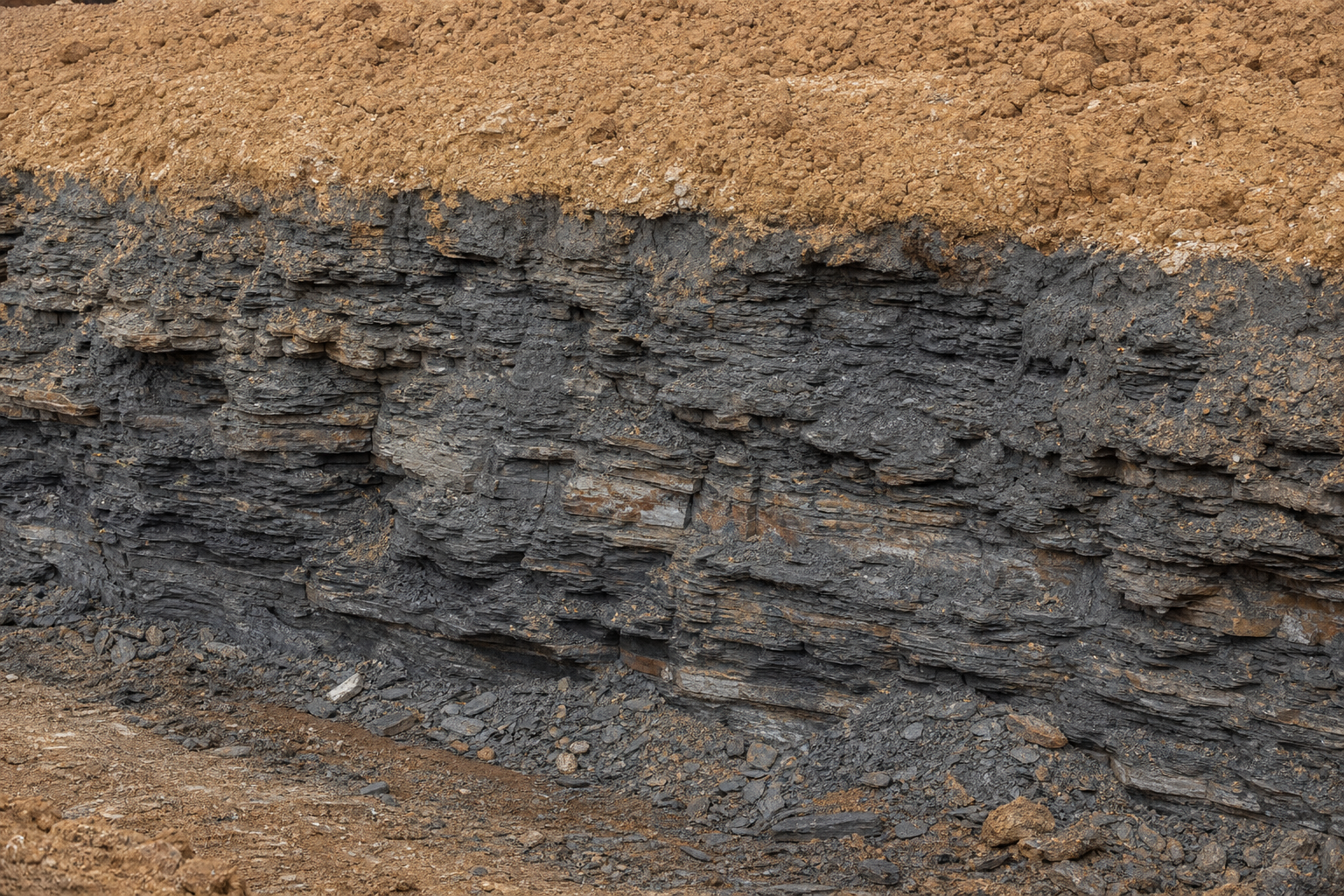
How the Eagle Ford Shale Affects Your DFW Home’s Foundation
When most people hear “Eagle Ford Shale,” they think of the massive oil and gas play in South Texas. But the Eagle Ford formation extends far beyond the drilling fields of Karnes County and Dimmit County. It runs northeast through Central Texas and surfaces — quite literally — across portions of the Dallas-Fort Worth metroplex, directly beneath the homes of hundreds of thousands of North Texas families.
If you live in eastern DFW — Rockwall, Mesquite, Garland, Rowlett, Wylie, or parts of east Dallas — the Eagle Ford Shale may be influencing your foundation’s behavior in ways that differ from homes on the western and northern sides of the metroplex. Understanding this formation and how it interacts with the surface soils above it gives you a significant advantage in protecting your home.
What Is the Eagle Ford Shale?
The Eagle Ford Shale is a sedimentary rock formation deposited during the Late Cretaceous period, roughly 90 to 100 million years ago, when a shallow sea covered much of what is now Texas. It consists primarily of organic-rich calcareous mudstone and marl — essentially, ancient marine sediments compressed into layered rock over millions of years.
In the DFW region, the Eagle Ford formation sits at varying depths beneath the surface. In some areas of eastern Dallas County and Rockwall County, it’s relatively shallow — close enough to the surface that it directly influences soil behavior, drainage patterns, and foundation performance. In other areas, it lies beneath thicker layers of alluvial soil and plays a more indirect role.
The formation runs in a roughly southwest-to-northeast band through the metroplex. If you drew a line from Waxahachie through Hutchins, across the eastern portions of Dallas, through Garland and Rowlett, and up toward Wylie and the eastern edge of Collin County, you’d approximate its surface expression in the DFW area. West of this band, the dominant subsurface geology shifts toward the Austin Chalk and Woodbine formations. East of it, you encounter the Taylor Marl and eventually the East Texas piney woods.
Eagle Ford Shale vs. Blackland Prairie Clay: Understanding the Layers
Every discussion of DFW foundation problems mentions the Blackland Prairie and its expansive clay. That clay is still present in the Eagle Ford zone — it sits on top of the shale formation as a weathered surface layer. But the Eagle Ford Shale beneath it changes how that clay behaves in important ways.
Drainage Behavior
The Eagle Ford Shale is relatively impermeable. Water doesn’t pass through it easily. When rain saturates the surface clay in areas underlain by Eagle Ford Shale, that water has nowhere to drain vertically. It sits in the clay layer above the shale, keeping the soil wetter for longer than it would be if the substrate were more porous (like the Austin Chalk limestone found in northern DFW communities).
This means homes in the Eagle Ford zone experience a different moisture dynamic. After heavy rains, the soil around and beneath foundations stays saturated longer. During drought, the surface dries out while moisture trapped above the shale layer can create inconsistent conditions at different depths. This layered moisture profile contributes to a phenomenon called differential heave — where different sections of a foundation experience different uplift pressures simultaneously.
Sulfate Content
The Eagle Ford Shale contains naturally occurring sulfate minerals, including gypsum and pyrite. When these minerals interact with moisture and the calcium in cement-treated soil (a common preparation method for building pads in DFW), they can cause a chemical reaction that produces ettringite — a mineral that expands dramatically as it crystallizes.
This sulfate-induced heave is a distinct problem from the clay expansion that affects the entire metroplex. It occurs primarily in areas where the Eagle Ford Shale is shallow enough that its mineral content mixes with the surface soils used for construction. Homes in eastern Mesquite, portions of Garland near Duck Creek, and some developments in Rockwall have experienced foundation uplift attributed at least partially to sulfate reactions.
Slope and Erosion Patterns
The Eagle Ford Shale weathers into a distinctive rolling terrain. If you drive through east Dallas or the communities around Lake Ray Hubbard, you’ll notice gentle but persistent slopes — very different from the flat prairies found further west. These slopes create natural drainage paths that direct surface water in specific directions.
Homes built on or near these natural slopes can experience foundation challenges related to water migration. The uphill side of a foundation may receive runoff from a broad area above it, while the downhill side sheds water quickly. This creates uneven moisture exposure around the foundation perimeter — wet on one side, drier on the other — which is a recipe for differential settlement.
How Eagle Ford Shale Homes Settle Differently
Foundation settlement in the Eagle Ford zone often follows patterns that are distinct from what’s seen in other parts of DFW:
Slower but Deeper Settlement
Because the Eagle Ford substrate holds moisture longer, foundations in this zone may not show obvious seasonal cracking as dramatically as homes on free-draining substrates. Instead, they tend toward slower, more persistent settlement that accumulates over years. A homeowner might not notice significant problems until a decade or more after construction, at which point the cumulative displacement can be substantial.
Uplift and Heave as Primary Concerns
While most DFW foundation discussions focus on settlement (the foundation dropping), homes in the Eagle Ford zone are also prone to heave — sections of the foundation pushing upward due to expanding soil or sulfate reactions. Heave can be harder to diagnose because it presents differently. Instead of a corner dropping, you might see the center of the slab rising, creating a dome effect. Doors in the center of the house stick while perimeter doors work fine. Interior floor cracks appear in the middle of rooms rather than near walls.
Asymmetric Damage Patterns
The rolling terrain and variable depth of the Eagle Ford Shale means that even homes on the same street can have very different subsurface conditions. One lot may have the shale formation three feet below grade while the adjacent lot has it at eight feet. This variability produces the inconsistent foundation performance that puzzles homeowners who see their neighbor’s home perfectly stable while theirs is showing cracks.
For homes built on a concrete slab, our slab foundation repair page explains how our team stabilizes settlement in DFW soils.
Neighborhoods and Communities in the Eagle Ford Zone
Understanding whether your home sits in the Eagle Ford zone helps you contextualize any foundation symptoms you’re experiencing.
Rockwall and Heath
Rockwall County sits squarely in the Eagle Ford zone. The city of Rockwall takes its name from a subsurface rock wall-like formation that some geologists believe is an exposed or near-surface expression of the underlying geology. Homes throughout Rockwall, Heath, and the developments surrounding Lake Ray Hubbard are built on soil underlain by Eagle Ford Shale at variable depths.
Foundation issues in Rockwall often involve a combination of clay expansion and the drainage complications created by the impermeable shale substrate. Newer developments on the east side of the lake — areas that were agricultural land until recently — may also contend with construction on fill soil placed over the native Eagle Ford-influenced terrain.
Mesquite
Mesquite spans a wide area, and its geology transitions from the Austin Chalk influence in its western neighborhoods to full Eagle Ford Shale in the east. Homes east of Town East Boulevard and south of I-30 are more likely to sit on Eagle Ford-influenced soils. The city’s older neighborhoods — many built in the 1970s and 1980s — have had decades of interaction between their foundations and this geology.
Garland
Garland’s eastern portions, particularly the areas around Lake Ray Hubbard and south toward Rowlett Creek, are in the Eagle Ford zone. The neighborhoods off Bobtown Road and along the eastern shoreline of the lake have terrain that reflects the shale’s influence — rolling slopes, clay-heavy soil, and drainage patterns that follow the underlying rock contours.
East Dallas
Parts of Dallas east of White Rock Lake and along the I-30 corridor toward the Mesquite border are in the transition zone where the Austin Chalk gives way to the Eagle Ford Shale. Neighborhoods like Pleasant Grove and Balch Springs experience soil conditions influenced by this geological transition.
If you are already seeing cracks, our foundation crack repair page explains how our team reads crack patterns before recommending any repair.
What This Means for Foundation Repair in the Eagle Ford Zone
Repairing a foundation in the Eagle Ford zone requires an understanding of the specific forces at play. A repair approach that works well for a home on Austin Chalk-influenced soil in Plano may not be appropriate for a home on Eagle Ford Shale in Rockwall.
Pier Selection Matters
The depth and bearing capacity of the Eagle Ford Shale make it an excellent target for foundation support — once you reach competent rock, you have a stable bearing surface. But reaching that surface requires piers of appropriate length, and the variable depth of the formation means that pier lengths can differ significantly even across a single foundation footprint.
Helical piers are often well-suited for Eagle Ford zone homes because they can be advanced to a specific torque value that corresponds to load-bearing capacity, regardless of the depth required to reach competent rock. This adaptability is important when the shale surface isn’t flat or uniform.
Moisture Management Is Critical
Because the Eagle Ford Shale traps moisture in the soil above it, drainage management around homes in this zone is especially important. Surface drainage should direct water well away from the foundation, and grading should ensure no water pools against the slab edge. In some cases, French drains or subsurface drainage systems are necessary to manage the water that the impermeable shale prevents from draining naturally.
Monitor for Both Settlement and Heave
If you live in the Eagle Ford zone, don’t assume that all foundation problems look like settlement. Have your foundation inspected by a professional who understands the difference between settlement and heave, and who can identify sulfate-related issues if they’re present. The correct diagnosis determines the correct repair approach.
Frequently Asked Questions
How do I know if my DFW home is in the Eagle Ford Shale zone?
Homes in Rockwall, eastern Mesquite, eastern Garland, Rowlett, Wylie, and parts of east Dallas are most likely in the Eagle Ford zone. You can check geological survey maps from the Texas Bureau of Economic Geology, or a foundation professional familiar with DFW geology can assess your property’s subsurface conditions during an inspection.
Does the Eagle Ford Shale make foundation problems worse than other parts of DFW?
Not necessarily worse, but different. The Eagle Ford Shale creates conditions that can lead to heave and sulfate-related expansion in addition to the clay shrink-swell cycle that affects all of DFW. Homes in the Eagle Ford zone may experience settlement patterns and damage types that are distinct from what’s typical in other parts of the metroplex.
Is my home’s foundation sitting directly on the Eagle Ford Shale?
In most cases, no. There’s a layer of weathered clay and topsoil between the foundation and the underlying shale formation. However, the depth of that layer varies significantly — from as little as two to three feet in some areas to ten or more feet in others. The shallower the shale, the more directly it influences your foundation’s behavior.
Can sulfate heave be repaired like normal foundation settlement?
Sulfate heave requires a different approach than settlement repair. Because the source of the movement is chemical expansion in the soil rather than lack of support, simply adding piers may not resolve the issue if the expansive reaction continues. Treatment often involves moisture management to limit water interaction with sulfate-bearing soils, combined with structural support to stabilize the affected foundation sections.
Should I get a soil test before buying a home in the Eagle Ford zone?
A geotechnical soil test isn’t standard for residential purchases, but if you’re buying in an area known for Eagle Ford Shale influence, a foundation inspection is strongly recommended during your Option Period. An experienced inspector will evaluate the foundation’s current condition and note any indicators of geology-related issues that a soil test would confirm.
Live in Rockwall, Mesquite, Garland, or eastern DFW? The geology beneath your home matters. Call Level Home Foundation Repair at 972-217-4820 for a free foundation inspection from a team that understands Eagle Ford Shale and the unique challenges it presents.
Leave a Reply