
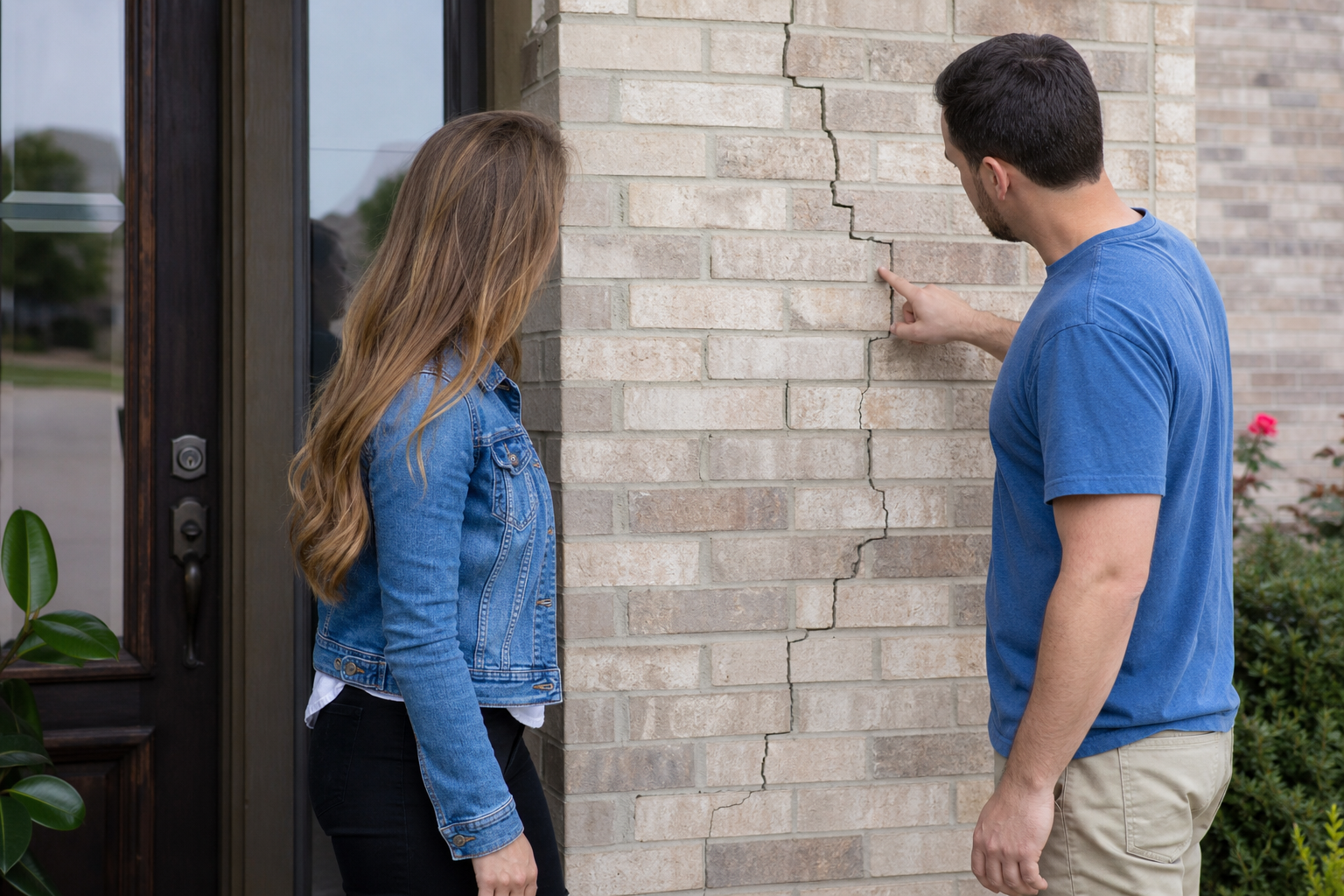
Foundation Inspection Before Buying a DFW Home
Buying a home in the Dallas-Fort Worth metroplex is one of the biggest financial decisions you’ll make. With median home prices ranging from $280,000 in some DFW suburbs to well over a million in neighborhoods like Highland Park, University Park, and Southlake, the stakes are enormous. And in North Texas — where every single home sits on some variety of expansive clay soil — a foundation inspection before closing isn’t optional. It’s essential.
This guide walks you through everything you need to know about getting a foundation inspection during the DFW home-buying process: when to do it, what inspectors look for, how Texas law protects you, and how to interpret findings so you can make a confident, informed decision.
Why Foundation Inspections Matter More in DFW Than Almost Anywhere
The Dallas-Fort Worth metroplex sits on the Blackland Prairie — one of the most expansive clay soil formations in North America. This soil swells when it absorbs moisture and shrinks dramatically during drought, creating a seasonal cycle of movement that stresses every foundation in the region.
Unlike markets in the Mountain West or Pacific Northwest where homes are built on stable rock or sandy soils, virtually every DFW home — new or old, expensive or modest — is subject to soil-related foundation movement. The question isn’t whether the home you’re considering has experienced soil movement. It has. The question is whether that movement has caused damage that affects the home’s structural integrity or will require costly repair.
A general home inspection (the standard inspection most buyers order) covers the foundation at a surface level. The inspector will note visible cracks and general observations. But a dedicated foundation inspection goes significantly deeper — literally measuring the foundation’s elevation across its entire footprint and identifying patterns that indicate whether movement is active, stable, or progressing.
The Texas Option Period: Your Window for Due Diligence
In Texas real estate transactions, the Option Period is a negotiated timeframe — typically seven to ten days after the effective date of the contract — during which the buyer can terminate the contract for any reason. This is your inspection window, and it’s your most important protection as a buyer.
During the Option Period, you should schedule:
- Your general home inspection
- A dedicated foundation inspection (if not included in the general inspection, or if the general inspector raises concerns)
- Any additional evaluations the general inspection recommends (plumbing, electrical, roof, HVAC)
The Option Period is short. In competitive DFW neighborhoods, some buyers negotiate shorter option periods to make their offers more attractive. Be cautious with this strategy. A five-day option period may not leave enough time to schedule a foundation specialist, receive their report, and make an informed decision — especially during peak buying season when inspectors are booked solid.
Practical tip: Line up your inspectors before you make an offer. Have a general inspector and a foundation specialist identified so you can book them immediately when your contract goes effective. In a market as active as DFW, waiting even two days to start scheduling can cost you valuable decision-making time.
What Happens During a Foundation Inspection
A professional foundation inspection in DFW typically takes one to three hours depending on the home’s size and complexity. Here’s what the inspector evaluates:
Exterior Assessment
The inspector walks the entire perimeter of the home, examining:
- Visible slab edge condition — cracks, spalling, or displacement along the exposed concrete
- Brick veneer — stair-step mortar cracks, separation at windows and doors, gaps at the roofline
- Grading and drainage — does the soil slope away from the foundation, or does it direct water toward the slab?
- Soil condition — visible gaps between soil and foundation (indicating drought-related shrinkage), areas of excessive moisture or standing water
- Vegetation proximity — large trees within 20 feet of the foundation that could be affecting soil moisture
Interior Assessment
Inside the home, the inspector checks every accessible room:
- Doors and windows — do they open, close, and latch properly? Sticking or gaps indicate frame distortion from foundation movement.
- Walls and ceilings — cracks in drywall, especially diagonal cracks at the corners of door and window openings. Separation between walls and ceilings or walls and floors.
- Floors — visible cracks in tile, unevenness that you can feel underfoot, or gaps at baseboards
- Cabinets and countertops — separation from walls, visible gaps, or doors that won’t align
Elevation Survey
This is the most critical component and what distinguishes a foundation inspection from a general inspection’s foundation observations. The inspector uses a manometer, zip level, or digital leveling instrument to measure the foundation’s elevation at multiple points across the floor plan — typically on a grid pattern at regular intervals.
The elevation data produces a topographic map of the foundation, showing exactly where it’s high, where it’s low, and what the total differential is across the footprint. In DFW, a total differential of up to about 1 to 1.5 inches across a typical residential slab is generally considered within tolerance for the local soil conditions. Differentials exceeding this range, or localized deflections that indicate a specific failure point, warrant further evaluation.
Documentation Review
If the seller or listing agent has provided documentation of previous foundation work, the inspector will review the repair records and assess whether the previous work appears to have been effective. Transferable warranties from reputable foundation repair companies can actually be a positive indicator — it means the issue was identified and addressed professionally.
Red Flags to Watch for at Open Houses
You don’t need to wait for a formal inspection to start evaluating a home’s foundation. When you’re walking through open houses or showings in DFW, keep an eye out for these indicators:
- Fresh paint or texture on walls and ceilings — especially in isolated areas. While sellers naturally touch up cosmetics before listing, heavy texture coat or fresh paint on a single wall section can conceal repaired cracks.
- Doors that have been shaved or trimmed — look at the bottom edge of interior doors. If a door has been cut to clear a sloping floor, you’ll see a diagonal cut rather than a factory-straight edge.
- New flooring in isolated areas — if one room has brand-new tile or laminate while the rest of the house has original flooring, ask why. Cracked tile from foundation movement is a common trigger for selective replacement.
- Landscape fabric or fresh mulch piled against the foundation — this may simply be landscaping, but it can also conceal soil gaps or foundation edge damage.
- Exterior cracks that have been patched — mortar repair on brick walls indicates previous cracking. The repair itself isn’t alarming, but it tells you the house has experienced enough movement to crack the masonry.
- Sloping floors — bring a small ball or marble. Set it on the floor in several rooms. If it rolls consistently in one direction, the floor has slope that may indicate foundation displacement.
None of these individually confirm a foundation problem, but multiple indicators in the same home should prompt a thorough foundation evaluation during your Option Period.
Texas Seller Disclosure: What the Law Requires
The Texas Real Property Code (Section 5.008) requires sellers of residential property to provide a written disclosure statement to the buyer. This disclosure includes a specific question about the property’s foundation condition:
> “Are you aware of any previous structural or roof repair?”
And:
> “Are you aware of the following conditions? Foundation problems.”
Sellers are legally required to disclose known foundation issues and any previous repairs. However, the key word is “known.” A seller who genuinely never noticed cracks or sticking doors may honestly answer “no” to these questions. And a seller who had repairs done should disclose them — and ideally provide documentation of the work performed and any warranties.
As a buyer, you should never rely solely on the seller’s disclosure as your foundation assessment. The disclosure tells you what the seller knows (or is willing to admit). Your inspection tells you what’s actually happening with the foundation right now.
TREC (the Texas Real Estate Commission) regulates the licensed inspectors who perform general home inspections, and their Standards of Practice define the minimum requirements for foundation evaluation during a standard inspection. A dedicated foundation inspection by a structural engineer or specialized foundation company typically goes beyond TREC minimums. For a pier and beam home, our crawl space inspection guide explains what those minimums require under the house.
New Construction vs. Existing Homes: Different Inspection Needs
The DFW market offers a vast range of housing stock, and your foundation inspection approach should adapt to what you’re buying.
Newer Homes (Built After 2000): Post-Tension Slab Considerations
Most homes built in the DFW metroplex since approximately 2000 have post-tension slab foundations. If you’re buying in Frisco, Prosper, Celina, Melissa, Anna, or the newer sections of McKinney and Allen, you’re almost certainly looking at PT slab construction.
For these homes, your inspector should:
- Confirm the slab type (post-tension vs. conventional)
- Check for visible anchor pockets along the slab perimeter and assess their condition
- Evaluate whether any cracks follow tendon lines (which could indicate tendon-related issues)
- Note the home’s age relative to the typical 3-to-10-year window when PT slab problems commonly emerge
Builder warranties on new and near-new homes may still be in effect. Understand what the warranty covers and whether it’s transferable to a new owner before closing.
Older Homes (Pre-1980): Pier-and-Beam Considerations
In established DFW neighborhoods — Lake Highlands, the M Streets, Oak Cliff, Lakewood, parts of Arlington and Irving, and the Mid-Cities — you’ll encounter homes from the 1940s through 1970s with pier-and-beam foundations.
Pier-and-beam inspections are different from slab inspections. The inspector needs to access the crawl space beneath the home to evaluate:
- The condition of wooden support beams and floor joists
- Pier spacing and whether piers have shifted or settled
- Moisture levels in the crawl space
- Evidence of wood deterioration, mold, or pest damage
- Ventilation adequacy
Pier-and-beam issues are generally more accessible to repair than slab issues, but the cost of deferred maintenance can add up quickly. A home with a neglected crawl space may need significant work to restore proper support.
Mid-Age Homes (1980s-1990s): The Transitional Era
Homes from this period in DFW are typically slab-on-grade with conventional rebar reinforcement — not post-tension. They’ve been through 30 to 45 years of drought-swell cycles, and their plumbing (often cast iron beneath the slab) may be nearing the end of its service life. For these homes, ask your inspector to pay particular attention to plumbing-related moisture indicators, as subslab leaks are a common accelerator of foundation damage in this housing generation.
How Foundation Issues Affect Your Offer Price
Discovering foundation problems during your inspection doesn’t necessarily mean you should walk away. It means you have information to make a strategic decision.
In the DFW market, here’s how buyers typically handle foundation findings:
- Minor issues (differential under 1.5 inches, cosmetic cracking only): Many buyers proceed without adjustment, recognizing that minor soil-related movement is normal in North Texas.
- Moderate issues (measurable differential, functional symptoms, recommended monitoring): Buyers may negotiate a price reduction to account for potential future repair costs, or request the seller obtain and share a structural engineer’s assessment.
- Significant issues (active settlement, recommended repair): Buyers typically request one of three things: the seller completes repairs before closing, the seller credits the buyer the estimated repair cost, or a price reduction reflecting the repair expense plus inconvenience. Some buyers walk away — but in a market where inventory is competitive, a home with a foundation issue can actually be an opportunity if you’re prepared and informed.
Your foundation inspection report gives you the leverage and documentation to negotiate from a position of knowledge. Without it, you’re guessing — and in a North Texas real estate transaction, guessing about the foundation is a risk you shouldn’t take.
Questions to Ask Your Foundation Inspector
When hiring a foundation inspector for your DFW home purchase, ask these questions upfront:
- What instruments do you use for the elevation survey? You want a manometer, zip level, or similar precision tool — not just a visual assessment.
- How many elevation readings will you take? More data points means a more accurate picture. A thorough inspection on a typical DFW home involves 20 to 50+ readings.
- Do you have experience with the specific foundation type? Post-tension slabs, conventional slabs, and pier-and-beam foundations each have different evaluation criteria.
- Will your report include a diagram showing elevation data? A visual elevation map is far more useful than a narrative-only report.
- Do you provide repair recommendations if needed? Understanding the recommended scope helps you estimate costs for negotiation purposes.
Frequently Asked Questions
How much does a foundation inspection cost in DFW?
Foundation inspection costs in the Dallas-Fort Worth area typically range from $300 to $500 for a residential property, depending on the home’s size and foundation type. This is a small investment relative to the potential cost of undetected foundation problems, which can run from several thousand to tens of thousands of dollars to repair.
Can I use my general home inspector for the foundation evaluation?
A general home inspector will assess the foundation as part of their standard inspection, but their evaluation is typically observational rather than quantitative. If the general inspector notes foundation concerns — or if you want the most thorough evaluation possible — a dedicated foundation inspection from a specialist provides more detailed data and analysis.
What if the seller already had foundation repair done?
Previous foundation repair isn’t automatically a negative. Well-executed repairs by a reputable company, supported by documentation and a transferable warranty, demonstrate that the issue was professionally addressed. Ask for all repair records, the warranty terms, and whether the warranty transfers to new owners. Have your inspector evaluate whether the repairs appear effective.
Should I skip the foundation inspection on new construction?
No. New construction in DFW is still built on expansive clay, and post-tension slabs can develop problems within a few years. If you’re buying a home that’s even two to three years old, a foundation evaluation establishes a baseline. For brand-new construction, a pre-purchase inspection documents the starting condition so any future changes can be measured against it.
How long does a foundation inspection report take to receive?
Most foundation inspection companies in DFW provide the written report within 24 to 48 hours of the inspection. Given the tight timelines of the Option Period, confirm turnaround time before booking. Some inspectors offer same-day verbal summaries with the written report to follow.
Buying a home in Dallas-Fort Worth? Don’t close without knowing what’s beneath your feet. Call Level Home Foundation Repair at 972-217-4820 for a thorough, professional foundation inspection that gives you the information you need to buy with confidence.
Leave a Reply