
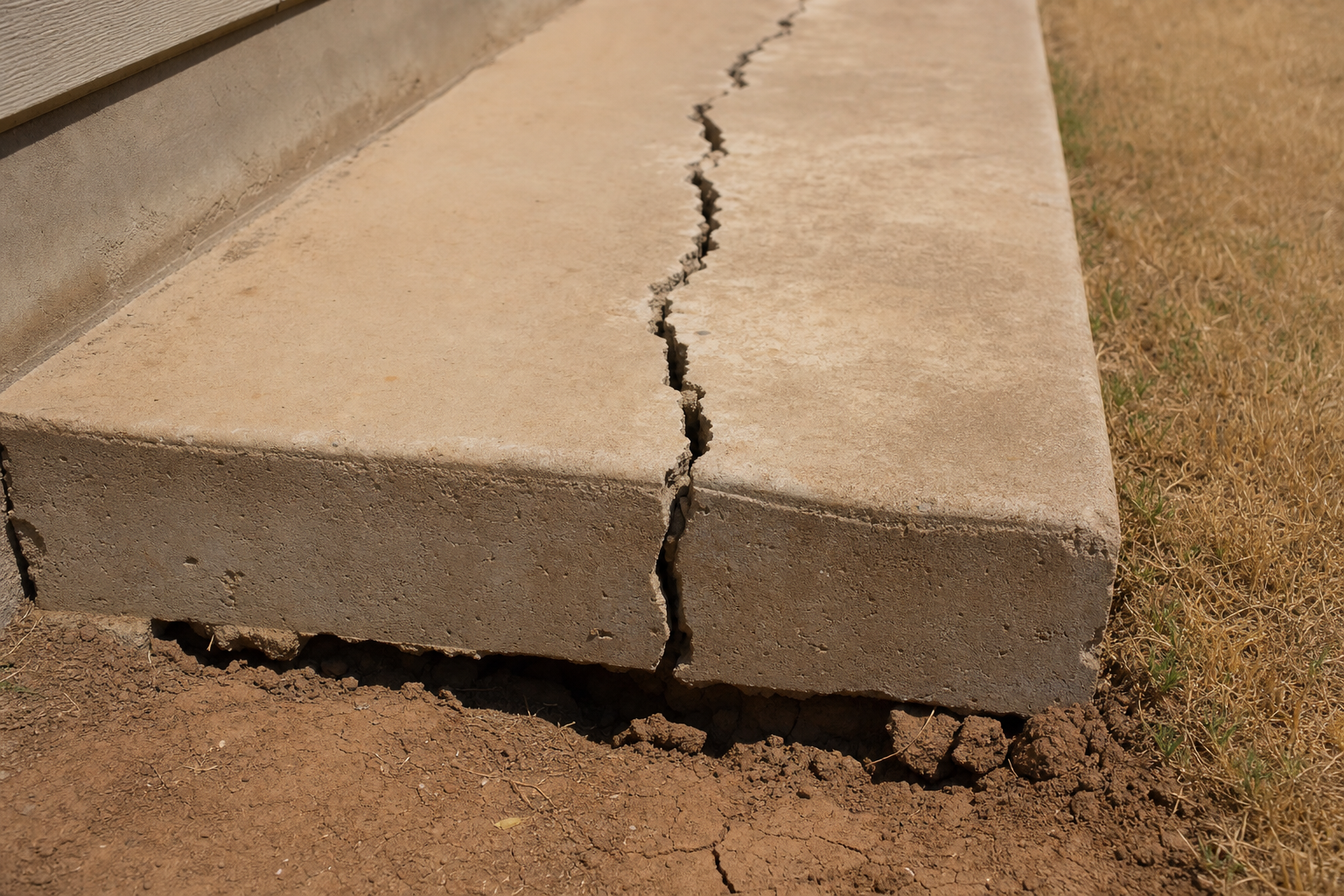
Why DFW Homes Crack Every Summer: Drought and Swell
If you’ve lived in the Dallas-Fort Worth metroplex for more than a couple of years, you’ve probably noticed something unsettling: cracks that appear in your walls, floors, or brick exterior during the hottest months of the year. Doors that stuck perfectly fine in April suddenly refuse to close in August. That hairline crack above the window frame? It wasn’t there last spring.
You’re not imagining things. And you’re not alone. Foundation cracks during Dallas summer drought conditions are one of the most common — and most misunderstood — problems facing North Texas homeowners. The culprit is a geological phenomenon called the drought-swell cycle, and it’s working against your foundation every single year.
What Is the Drought-Swell Cycle?
The drought-swell cycle is the seasonal expansion and contraction of the soil beneath your home. In the DFW metroplex, this cycle is driven by two forces: the region’s expansive clay soils and its increasingly extreme weather patterns.
North Texas sits atop the Blackland Prairie, a geological formation dominated by montmorillonite clay — one of the most reactive soil types on the planet. This clay has a remarkable ability to absorb water and swell, then lose that water and shrink dramatically. The volume change can be as much as 30 percent between a fully saturated state and a fully dried-out state.
That means the ground beneath your home is essentially in constant motion. And when you place a rigid concrete slab or pier-and-beam structure on top of a surface that moves several inches per year, something has to give.
The DFW Seasonal Timeline: Month by Month
Understanding when and how the drought-swell cycle affects your home helps you spot problems early. Here’s what’s happening beneath a typical DFW foundation throughout the year:
March Through May: The Calm Before the Heat
Spring in North Texas usually brings moderate rainfall. The soil around your foundation is relatively balanced — not too wet, not too dry. This is often when your doors and windows work best, and existing cracks may appear to close slightly. Don’t mistake this for the problem resolving itself. The soil is simply in a neutral state.
June Through September: Drought Season and Maximum Shrinkage
This is when the damage happens. As temperatures climb past 100°F — which DFW regularly experiences for weeks at a stretch — the Blackland Prairie clay begins losing moisture rapidly. The soil contracts, pulling away from your foundation perimeter. If you walk around your home during a hot August afternoon, you may see a visible gap between the soil surface and the edge of your foundation. Those gaps can reach two to four inches wide and extend several feet deep.
When the soil shrinks away, your foundation loses its support. The edges of the slab, which were resting on firm ground, are now suspended over voids. Gravity pulls those unsupported sections downward. This is called settlement, and it’s the direct cause of those summer foundation cracks homeowners across Dallas and Fort Worth notice every year.
October Through December: The Rains Return
Fall and early winter bring rain back to North Texas. The parched clay soaks up moisture like a sponge and begins to expand. But it doesn’t expand uniformly. Areas that dried out fastest — typically the south and west sides of your home, which get the most sun exposure — re-expand at different rates than shaded areas. This uneven expansion creates a new set of forces pushing up against your foundation from below. Engineers call this upheaval, and it can be just as damaging as settlement.
January Through February: Cold Snaps and Moisture Fluctuation
North Texas winters are unpredictable. A hard freeze can lock surface moisture, while the deeper clay layers continue adjusting. Freeze-thaw cycles add another layer of stress to foundations already fatigued from a full year of movement. Homes in neighborhoods built on the Austin Chalk formation — common in areas north of downtown Dallas through Richardson and Plano — may experience slightly different patterns due to the limestone substrate beneath the clay layer.
Why DFW Is Uniquely Vulnerable
Plenty of cities have clay soil. So why is the drought-swell cycle so destructive in Dallas-Fort Worth?
The answer is severity and repetition. DFW’s climate has become more extreme over the past two decades. Summer temperatures are hotter and droughts are longer. When rain does arrive, it often comes in intense bursts — two or three inches in an afternoon — rather than gentle, sustained soaking. This whiplash between extreme dry and sudden saturation amplifies the soil movement far beyond what a gradual seasonal shift would produce.
The Blackland Prairie clay underlying most of the metroplex is also among the most expansive clay formations in North America. It stretches from the Red River south through Dallas, Arlington, Fort Worth, and beyond. Virtually every residential neighborhood in the core DFW area sits on this soil type.
Additionally, the sheer scale of development in North Texas has altered natural drainage patterns. Neighborhoods that once had open fields absorbing runoff are now covered with impervious surfaces — driveways, sidewalks, rooftops — that channel water unpredictably around foundations.
Not every crack means the same thing. Our foundation crack repair guide explains which cracks are usually cosmetic and which ones call for an inspection.
Signs of Drought-Swell Damage in Your Home
Foundation damage from the drought-swell cycle doesn’t always look like a dramatic crack running across your living room floor. The early signs are subtler:
- Sticking doors and windows: When your foundation shifts even a fraction of an inch, door frames go out of square. Interior doors that suddenly won’t latch or exterior doors that drag across the threshold are classic indicators.
- Diagonal cracks at window and door corners: Stress concentrates at the corners of openings. Look for cracks radiating at 45-degree angles from the upper corners of windows and doorframes.
- Gaps between walls and ceiling or floor: As the foundation settles unevenly, the framing follows. You may see the wall pulling away from the ceiling in one room while the baseboard separates from the floor in another.
- Cracked brick exterior: Stair-step cracks along the mortar joints of your brick veneer are a telltale sign. These often appear on the south-facing wall first, where sun exposure drives the most soil drying.
- Uneven floors: Place a ball on the floor and see if it rolls. In a home affected by differential settlement, you can sometimes feel the slope as you walk from room to room.
- Plumbing issues: Shifting foundations can stress drain lines beneath the slab, leading to slow drains, sewage odors, or unexplained increases in your water bill from hidden leaks.
How to Protect Your Foundation From the Drought-Swell Cycle
While you can’t stop the cycle, you can minimize its impact on your home. These strategies focus on maintaining consistent soil moisture around your foundation — the single most effective preventive measure.
Consistent Watering During Drought
During summer dry spells, use a soaker hose placed 12 to 18 inches from your foundation perimeter. Run it for 15 to 30 minutes daily. The goal isn’t to flood the soil but to prevent the clay from drying out and pulling away. Water slowly and consistently rather than in heavy bursts.
Proper Drainage Away From the Foundation
Conversely, you need water to move away from your foundation during heavy rain events. Make sure your gutters are clean and that downspouts discharge at least four to six feet from the foundation. Grade the soil around your home so it slopes away at roughly one inch per foot for the first six feet. If your property has persistent drainage challenges, professional drainage solutions can make a significant difference.
Manage Vegetation Near the Foundation
Large trees within 15 to 20 feet of your home can pull enormous amounts of moisture from the soil through their root systems. Live oaks and pecans — both common across DFW — are particularly thirsty. This doesn’t mean you need to cut down your trees, but you should be aware that the soil near large trees will dry out faster and may need supplemental watering.
Monitor and Act Early
Walk your foundation perimeter every few weeks during summer. Look for soil separation, new cracks in the brick, or changes in how doors and windows operate. Early detection allows for less invasive and less costly intervention. A professional foundation inspection gives you a clear baseline to measure future changes against.
When the cycle has already pushed part of a home out of level, sticking doors and sloping floors usually follow. Our guide to house leveling in Dallas Fort Worth explains how our team evaluates that movement and what a leveling plan involves.
When Seasonal Cracking Becomes a Structural Problem
Not every crack requires foundation repair. Hairline cracks in drywall that open slightly in summer and close in winter may simply reflect normal seasonal movement. But there’s a threshold where cosmetic becomes structural:
- Cracks wider than one-quarter inch
- Cracks that grow noticeably from one season to the next
- Multiple signs appearing simultaneously (sticking doors plus wall cracks plus uneven floors)
- Visible foundation displacement — one section sitting noticeably higher or lower than another
If you’re seeing these patterns, the drought-swell cycle has likely caused cumulative damage that won’t self-correct. A structural assessment from an experienced foundation repair company can tell you exactly what’s happening and what — if anything — needs to be done about it.
Frequently Asked Questions
Why do foundation cracks in Dallas get worse every summer?
Dallas sits on Blackland Prairie clay that shrinks dramatically during summer drought. As the soil contracts and pulls away from your foundation, unsupported sections settle and crack. Each year’s cycle adds cumulative stress, which is why cracks tend to worsen over time rather than staying stable.
Can watering my foundation really prevent cracks?
Consistent foundation watering is the most effective preventive measure available to DFW homeowners. By maintaining stable soil moisture during drought months, you reduce the volume change in the clay and minimize the gaps that form along your foundation perimeter. It won’t fix existing structural damage, but it can slow future movement significantly.
How do I know if my foundation crack is serious or just cosmetic?
Hairline cracks in drywall that appear and disappear with the seasons are generally cosmetic. Cracks wider than a quarter-inch, cracks that grow year over year, or cracks accompanied by other symptoms — sticking doors, uneven floors, plumbing issues — suggest structural movement that warrants a professional evaluation.
Is the drought-swell cycle getting worse in North Texas?
Climate data for the DFW region shows a trend toward hotter summers, longer dry spells, and more intense rainfall events over the past two decades. This amplifies the drought-swell cycle because the soil experiences more extreme moisture swings. Many foundation repair professionals in North Texas report increasing demand correlating with these climate trends.
When is the best time of year to have my foundation inspected in DFW?
Late spring (April through May) is often ideal because the soil is in a relatively neutral moisture state, giving inspectors a clear picture of your foundation’s resting condition. However, if you’re noticing active symptoms — especially during summer — don’t wait. Early assessment prevents small problems from compounding through another drought cycle.
Concerned about cracks in your DFW home? The drought-swell cycle won’t stop on its own, but foundation damage doesn’t have to keep getting worse. Call Level Home Foundation Repair at 972-217-4820 for a free foundation inspection and find out exactly where your home stands.
Leave a Reply