
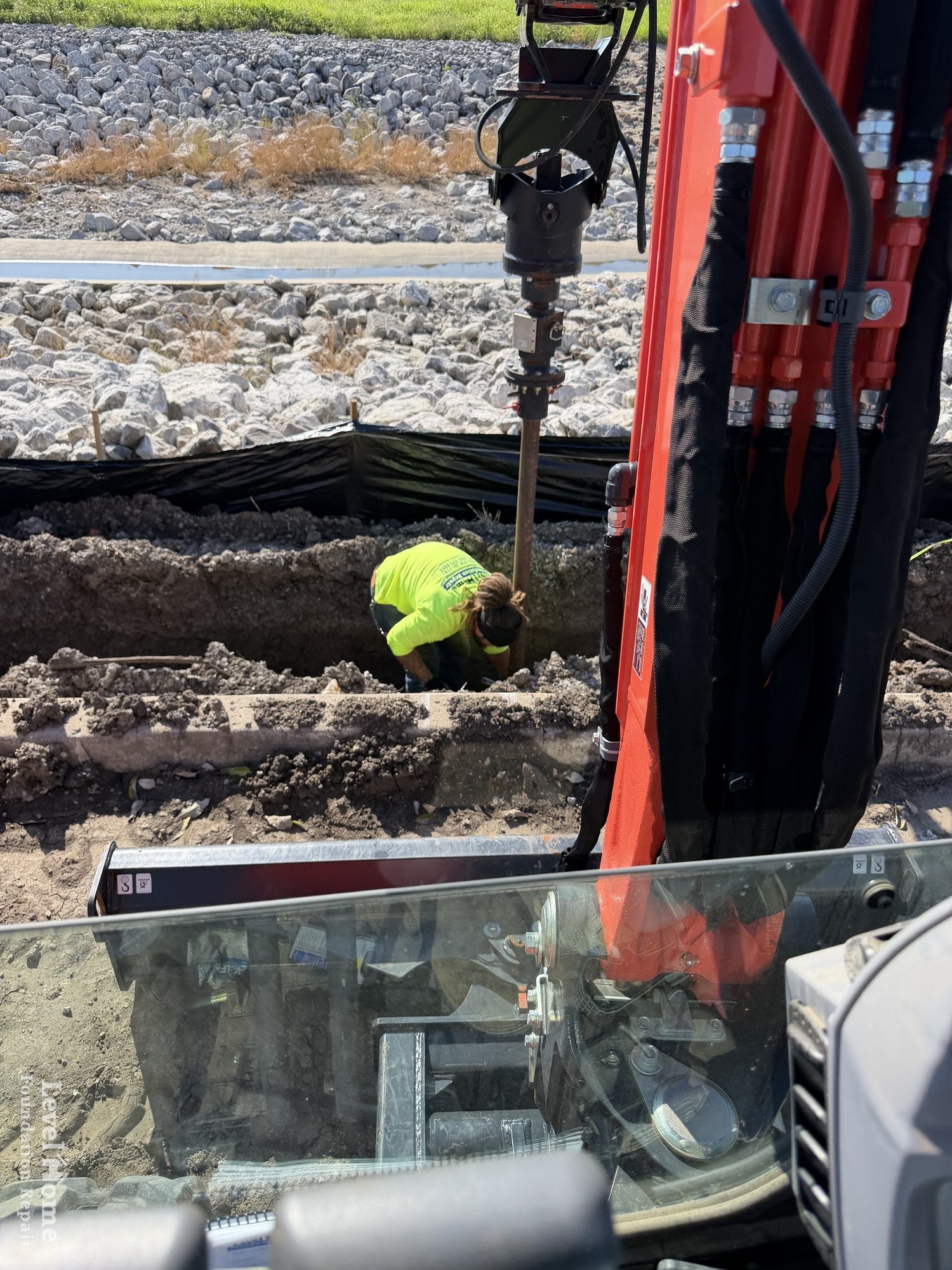
Commercial Helical Piers in Dallas Fort Worth
Commercial projects across Dallas, Fort Worth, and North Texas need foundation support that accounts for real site conditions, construction schedules, and long term performance. When weak soils, moisture, or settlement risk affect a retaining wall, building addition, utility structure, or other commercial improvement, helical piers from Level Home can provide a practical path to a stable load bearing stratum.
Our team works with property owners, general contractors, municipalities, and project teams that need clear field information and dependable installation. This guide explains where commercial helical piers fit, what a successful retaining wall project can teach DFW decision makers, and when to begin a conversation with an Engineer Recommended Contractor.
Why Commercial Helical Piers Matter in DFW
Dallas Fort Worth construction takes place on a wide range of soil conditions. Expansive clay, changing moisture, fill material, drainage paths, and varying site elevations can all influence how a structure performs. A commercial foundation solution must do more than address what is visible at grade. It must transfer loads beyond concerning soils to a competent bearing layer.
Helical piers are steel foundation elements with helical bearing plates. During installation, they are advanced into the ground while torque is monitored. This gives the project team useful installation data while the pier moves toward the intended bearing capacity. For the right application, that combination of depth, controlled installation, and immediate load capability is especially valuable on active commercial sites.
What Makes a Project a Good Fit
Commercial helical piers can support a variety of applications when site conditions and project requirements call for deep foundation support. Common examples include retaining wall footings, new commercial construction, additions, equipment pads, entry structures, utility supports, exterior improvements, and infrastructure work.
They are also worth evaluating where a project must work around restricted access, where excavation needs to remain limited, or where construction sequencing matters. Every property is different, so Level Home begins with the project scope, observed conditions, and available engineering direction. For broader background on deep support systems, see our DFW guide to foundation piers and bedrock depth.
A Commercial Retaining Wall Case Study
Firefighters Credit Union needed a 150 foot retaining wall rebuild after the previous wall failed. The project conditions included compromised soils and high water tables, two factors that can create serious challenges for a wall footing. A retaining wall is not simply a landscape feature. It holds back soil and can be exposed to water pressure, movement, and substantial structural loads.
Our team used helical piers as a permanent preconstruction solution incorporated into the footing. Rather than relying on the concerning material near the surface, the piers were driven past those soils to a load bearing stratum. This approach gave the new wall a deep support strategy from the start.
Installation Data From the Firefighters Credit Union Project
The helical piers on this project were driven to 18 feet. Torque ratings exceeded 8,000 foot pounds, and the installation supported a load capacity of more than 60,000 pounds per pier. These figures demonstrate why installation data matters in commercial work. Depth alone does not establish performance. The goal is to advance the pier through unsuitable material and achieve the conditions required for the intended load path.
For property managers and contractors, the important lesson is not that every DFW project will require the same depth or capacity. It is that a commercial solution should be based on the actual structure, soils, water conditions, and engineering requirements. The Firefighters Credit Union project shows the value of considering permanent deep support before a replacement wall is built.
Retaining Walls Need Both Support and Water Management
A retaining wall can fail for more than one reason. Weak bearing soils can allow movement below the footing, while water can increase pressure behind the wall and change the behavior of surrounding soil. Addressing only the visible wall without evaluating the foundation and water conditions may leave the underlying risk unresolved.
That is why commercial planning should consider both deep support and site water management. Our drainage solutions can help property owners evaluate how water moves around a structure and paved areas. For a helpful overview of site water controls, read our guide to French drains, tight lines, grading, and sump pumps in DFW.
Helical Piers for New Construction
The most efficient time to manage some foundation risks is before the structure is completed. Preconstruction piers allow project teams to incorporate deep support into the plan before settlement becomes a repair issue. On commercial work, this can be especially relevant for retaining wall footings, additions, new facilities, and other improvements that will carry long term loads. For the residential side of the same idea, our guide to helical piers for new construction explains why building pads settle under new homes.
When helical piers are incorporated into a footing as part of preconstruction, the support system is part of the foundation strategy rather than a reaction to damage. This was the permanent approach used for Firefighters Credit Union. Early coordination can also help contractors sequence site work with greater confidence.
Commercial Infrastructure and Municipal Applications
North Texas infrastructure and municipal projects may have demanding access, schedule, and performance requirements. Helical piers can be considered for supports associated with site improvements, utility related structures, retaining systems, and other engineered commercial applications. Their installation method can be useful where an efficient deep foundation solution is needed without the disruption of a larger excavation program.
Level Home does not treat commercial work as a generic service. We review the scope with the people responsible for the asset and coordinate around the project requirements. Our processes are approved by engineering firms across Texas, and we have never failed an engineer reinspection. That Engineer Recommended Contractor perspective helps keep field execution aligned with the project plan.
Helical Piers and Steel Piers Serve Different Roles
Commercial buyers sometimes ask whether a helical system or a driven steel system is appropriate. The answer depends on the structure, the type of work, access, loads, soil conditions, and engineering direction. Helical piers are commonly considered for preconstruction and applications where torque monitored installation provides useful information. Steel piers are another deep foundation option that may be appropriate for repair conditions.
Comparing systems by price alone can miss the real question: which solution provides the correct load path for this property? Review our DFW comparison of steel and concrete piers for an introduction to foundation support options, then speak with our team about the commercial scope.
Evaluating Existing Commercial Foundation Concerns
Not every commercial property needs helical piers, but early evaluation can make a major difference. Signs such as wall displacement, cracks, doors or gates that no longer operate correctly, sloping pavement near a structure, or recurring water accumulation deserve attention. The issue may involve the wall, the footing, drainage, nearby concrete, or more than one of these factors.
Level Home offers a foundation inspection so owners and project teams can begin with a professional assessment. Our guide to structural foundation damage in DFW explains several conditions that should prompt a closer look. For concrete surfaces around a commercial asset, concrete leveling services may be relevant when the condition is appropriate for lifting rather than deep structural support.
Access, Sequencing, and Jobsite Coordination
Commercial foundation work often happens while a property remains active. Tenants, customers, deliveries, utilities, fences, landscaping, and traffic flow all matter. Our team discusses access and sequencing before work begins so the installation plan reflects the realities of the site.
That coordination is important for retaining wall reconstruction and new construction alike. The goal is not merely to install piers. It is to help the project move forward with an organized foundation support plan. Learn more about the people and values behind that work on our About Level Home page.
Why North Texas Water and Soil Conditions Deserve Attention
Soil movement and moisture change can affect commercial property over time. In parts of Dallas Fort Worth, dry periods can shrink clay soils and wet periods can introduce swell or water related pressure. Site grading and drainage can influence how those cycles affect structures and exterior improvements.
Our DFW drought and swell cycle guide provides context for these changes. Properties with enclosed subfloor areas can also benefit from a review of crawl space repair needs, particularly when moisture and structural conditions overlap. Commercial helical pier planning should always take the whole site context into account.
Questions to Ask Before Choosing a Commercial Pier Contractor
A strong commercial foundation conversation starts with specific questions. Ask what conditions were observed, what loads must be supported, how the selected system will transfer those loads, how installation will be documented, and how the work will coordinate with engineering requirements. Ask whether drainage or grading should be addressed with the structural work.
It is also useful to ask about the intended use of the structure. A retaining wall, new building footing, access structure, and utility support do not carry the same demands. Level Home can help stakeholders understand the options and prepare for an Engineer Recommended Contractor approach that fits the scope.
Commercial Helical Pier Questions From DFW Buyers
What are commercial helical piers used for in DFW? They can support retaining walls, new construction footings, additions, infrastructure features, utility related structures, and other commercial improvements where deep foundation support is appropriate.
Can helical piers support a commercial retaining wall? Yes. When site conditions and project requirements call for this solution, piers can be incorporated into the footing to transfer wall loads beyond concerning near surface soils.
How is capacity evaluated during installation? Our team monitors installation torque as the pier advances. Required depth and capacity depend on the structure, soil conditions, project scope, and applicable engineering requirements.
Are helical piers useful for commercial new construction in North Texas? They may be considered as a preconstruction option when a planned footing or improvement needs deep support before the structure is built. Early planning allows the project team to consider access, sequencing, drainage, and the footing connection before construction is underway.
How do commercial owners request an evaluation? Contact Level Home for a free foundation inspection. We can review observed conditions and discuss the next appropriate step for the property and project team.
Start a Commercial Helical Pier Conversation With Level Home
For Dallas, Fort Worth, and North Texas commercial projects, helical piers may provide the deep support needed for retaining walls, new construction, infrastructure, and municipal improvements. The Firefighters Credit Union project is one example of how a permanent helical footing solution can move past compromised soils and support a rebuilt structure.
If you are planning a project or responding to foundation movement, contact Level Home for a free foundation inspection. Our team will review the property conditions, discuss the commercial objective, and help you determine the next appropriate step.
Leave a Reply