
Bedford TX Foundation Repair Guide
Bedford sits right in the heart of the Mid-Cities — that stretch of Tarrant County communities nestled between Dallas and Fort Worth along the Highway 121/183 corridor. It’s a mature, established community with tree-lined streets, strong schools in the HEB ISD, and neighborhoods where families have lived for decades. It’s also a community where foundation problems are remarkably common, and understanding why can save you thousands of dollars and years of frustration.
If you own a home in Bedford, this guide is written specifically for you. Not a generic overview of foundation repair — a focused look at the soil conditions, housing stock, vegetation, and local factors that shape foundation health in your particular corner of North Texas.
Bedford’s Soil: The Mid-Cities Challenge
Bedford’s soil profile is dominated by the same Blackland Prairie expansive clay that underlies much of the DFW metroplex, but the Mid-Cities location adds some specific characteristics. The area sits in a transition zone where the heavy clay of the eastern prairie begins to merge with the slightly sandier, limestone-influenced soils found further west toward Fort Worth.
What this means practically is that Bedford soil is highly expansive — it swells significantly when wet and shrinks when dry — but it can also be somewhat variable from one block to the next. A home on Harwood Road may sit on slightly different soil composition than a home off Bedford Road, even though they’re only a mile apart. This variability is one reason why two neighboring houses in Bedford can have very different foundation histories.
The seasonal drought-swell cycle that affects all of North Texas hits Bedford hard. Summer temperatures regularly exceed 100°F, drying the clay and causing it to contract away from foundation edges. When fall and winter rains arrive, the clay re-expands unevenly. This annual push-and-pull is the primary driver of foundation movement in Bedford homes.
The 1970s and 1980s Housing Stock
This is where Bedford’s story differs significantly from newer DFW suburbs. While communities like Frisco and Celina are full of homes built in the 2000s and 2010s on post-tension slabs, Bedford’s residential core was largely developed between the late 1960s and mid-1980s. Many of the neighborhoods surrounding Boys Ranch Park, Pennington Field, and the Bedford Boys Ranch activity complex feature homes from this era.
Homes built during this period in the Mid-Cities typically feature:
- Conventionally reinforced slab-on-grade foundations using rebar rather than post-tension cables. These slabs are generally thicker than modern PT slabs but rely on the rebar grid and soil bearing capacity for structural support.
- Some pier-and-beam construction in the older sections, particularly homes built in the late 1960s and early 1970s. Pier-and-beam foundations have a crawl space beneath the home and a different set of maintenance needs and failure modes.
- Original plumbing that may be cast iron beneath the slab. Cast iron drain lines from this era are now 40 to 55 years old and are frequently deteriorated, leading to subslab leaks that compound foundation problems by introducing uncontrolled moisture.
The age of these homes is significant because forty-plus years of drought-swell cycling takes a cumulative toll. A foundation that performed well for its first two decades may begin showing accelerating damage as the soil beneath it has been worked and reworked through hundreds of seasonal moisture swings.
Bedford’s Trees: Beautiful but Consequential
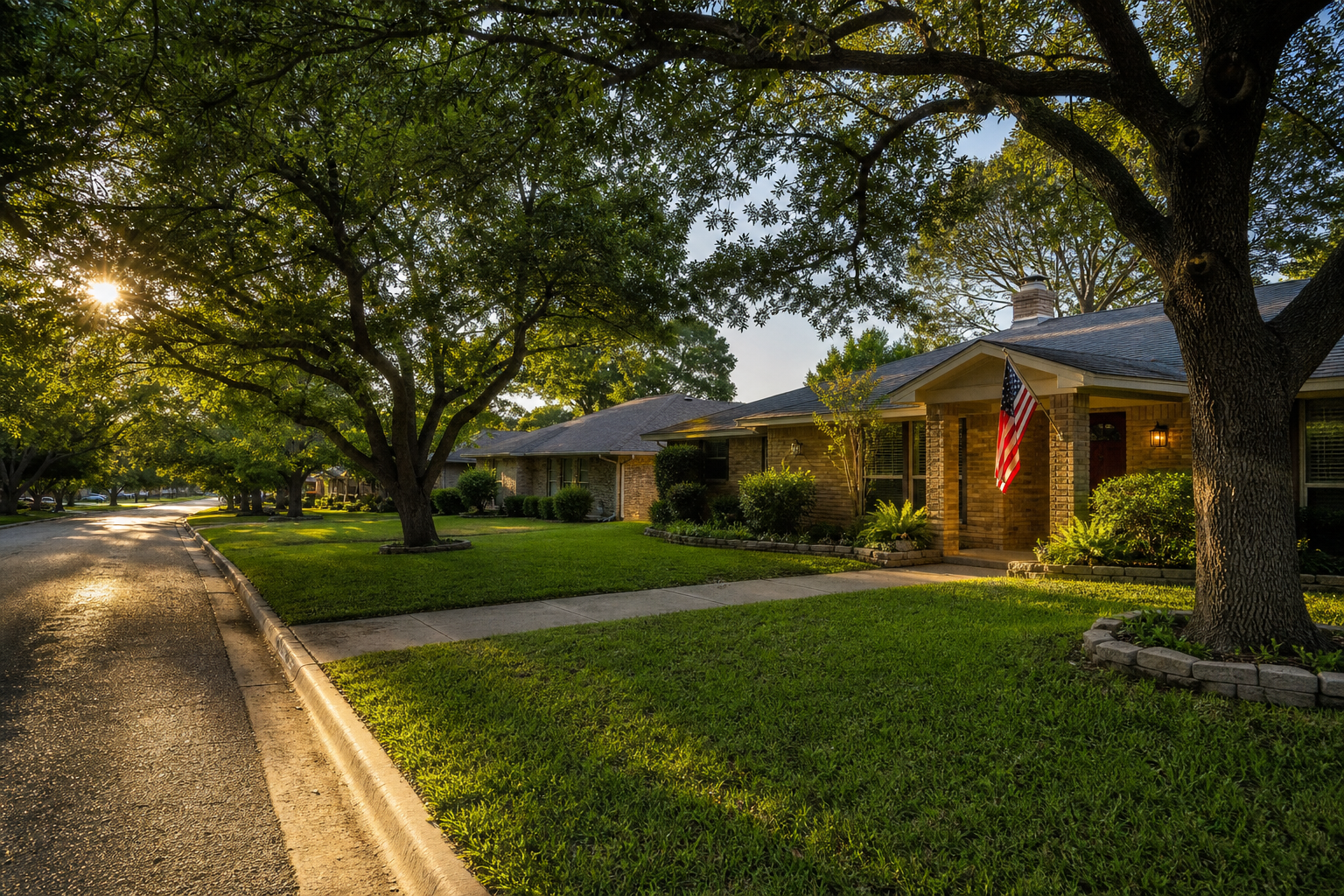
One of Bedford’s most appealing features is its mature tree canopy. Drive through neighborhoods along Oakwood Drive, Harwood Road, or near Shady Brook Park, and you’ll see towering live oaks, sprawling pecans, elms, and Bradford pears that have been growing for decades.
These trees are a genuine asset — they provide shade, increase property values, and give Bedford its established character. They also have a significant impact on foundation health.
How Tree Roots Affect Your Foundation
A mature live oak can transpire hundreds of gallons of water per week during summer. That water comes from the soil, and the tree’s root system extends far beyond the canopy drip line to find it. When large trees grow within 15 to 20 feet of a home — common in Bedford’s older neighborhoods — their root systems actively pull moisture from the clay beneath and around the foundation.
This creates localized soil shrinkage that’s more severe than what the surrounding area experiences. The foundation section nearest the tree settles more than the rest of the slab, creating differential movement. You might notice a corner of the house dropping — doors sticking on one side of the home but not the other, cracks concentrated in rooms nearest the large tree, or the brick veneer developing stair-step cracking on the wall closest to the trunk.
Managing Trees Near Your Foundation
Removing a mature tree is a drastic step and isn’t always necessary. But Bedford homeowners with large trees near their homes should take proactive measures:
- Water the foundation perimeter consistently during drought months. A soaker hose running 12 to 18 inches from the foundation on the side nearest large trees can offset some of the moisture the roots are pulling from the soil.
- Install root barriers if root intrusion is documented. These vertical barriers redirect root growth away from the foundation without harming the tree.
- Monitor the tree side of the house more carefully for signs of differential settlement. If damage is concentrated near a large tree, that correlation is likely not coincidental.
Common Foundation Problems in Bedford Homes
Based on the soil conditions, housing age, and vegetation typical of Bedford, the most common foundation issues local homeowners encounter include:
Differential Settlement Along the Perimeter
The edges of a slab-on-grade foundation are most exposed to moisture changes. In Bedford, the south and west-facing edges (which get the most direct sun) tend to dry out fastest, settling first. This creates a characteristic pattern where one side of the house is noticeably lower than the other.
Interior Slab Cracking From Plumbing Leaks
With aging cast-iron plumbing beneath 1970s-era slabs, subslab leaks are a frequent trigger for foundation damage. The leak creates a localized wet zone while the surrounding soil remains dry, causing uneven soil movement directly beneath the living space. Signs include unexplained warm spots on the floor, higher-than-normal water bills, or a faint sewage odor.
Pier-and-Beam Moisture Problems
Bedford homes with pier-and-beam foundations face a different challenge. The crawl space beneath the home can trap moisture, especially if ventilation is inadequate or if the ground within the crawl space isn’t properly graded. Over time, excess moisture can deteriorate wooden support beams, cause pier footings to shift in the soft soil, and create an environment for mold and wood-boring insects.
Brick Veneer Separation
Many Bedford homes from the 1970s and 1980s feature full brick exteriors. When the foundation moves, the rigid brick can’t flex with it. Stair-step cracks along mortar joints, separation where brick meets window or door frames, and gaps at the roofline where the brick wall has pulled away from the soffit are all common indicators.
What a Foundation Inspection Looks Like in Bedford
If you’re experiencing any of the symptoms described above — or if you’re buying or selling a home in Bedford — a professional foundation inspection is the logical first step.
A thorough inspection of a Bedford home typically involves:
- Exterior perimeter walk to assess the condition of the visible slab edge, brick veneer, grading, and drainage patterns around the home.
- Interior evaluation of every room, checking doors, windows, floors, and walls for indicators of movement.
- Elevation survey using a manometer or digital level to map the slab’s current topography — identifying high points, low points, and the overall differential across the floor plan.
- Assessment of contributing factors including tree proximity, drainage, plumbing condition, and soil moisture levels.
The inspection results give you a clear picture of your foundation’s current condition and whether repair is recommended, monitoring is appropriate, or no action is needed.
Bedford Neighborhoods and Foundation Trends
While every home is unique, certain patterns emerge across Bedford’s neighborhoods:
Meadow Park / Shady Brook area: Homes here are primarily 1970s construction with mature tree canopies. Root-related differential settlement is a frequent concern. The gentle terrain means drainage is generally adequate but can stagnate in flat rear yards.
Bedford Heights / Harwood corridor: Mix of 1970s and 1980s builds. Several streets in this area sit slightly lower topographically, and residents report occasional surface drainage challenges after heavy rains. Homes closer to the commercial corridors have seen increased impervious surface coverage from neighboring development, which can redirect water toward residential foundations.
Central Bedford near Boys Ranch Park: Some of the oldest residential stock in the city. Pier-and-beam construction is more common here than in other Bedford neighborhoods. Homes that haven’t had crawl space maintenance may need beam and pier attention alongside any foundation work.
North Bedford toward Hurst and Colleyville: Slightly newer construction (1980s to early 1990s) on generally good lots. Soil in this area can have a higher sand content, which reduces — but doesn’t eliminate — the expansive clay problem. Foundation issues here tend to develop more slowly but are still driven by the same drought-swell mechanisms.
The Cost Factor: What Bedford Homeowners Should Expect
Foundation repair costs in Bedford align with broader DFW market pricing, but the specific scope depends on the home’s size, foundation type, severity of damage, and number of support points needed. Factors that can influence cost include:
- Home size and footprint: A 2,400-square-foot single-story home has more perimeter to address than a 1,600-square-foot home.
- Foundation type: Slab repair and pier-and-beam repair involve different methods and materials.
- Severity and extent: A corner that’s settled an inch requires fewer supports than a foundation with movement across multiple sections.
- Access considerations: Mature landscaping, fences, and tight lot lines in established Bedford neighborhoods can affect equipment access and project logistics.
A free foundation inspection gives you a detailed understanding of what’s needed before any financial commitment. Reputable companies provide written proposals with clear scope and pricing — no surprises.
Frequently Asked Questions
How common are foundation problems in Bedford, TX?
Very common. Bedford’s combination of expansive Blackland Prairie clay, 1970s-1980s housing stock, and mature tree canopies makes it one of the Mid-Cities communities where foundation repair is most frequently needed. The decades of drought-swell cycling have taken a cumulative toll on the area’s older foundations.
Should I be worried about foundation issues when buying a home in Bedford?
Foundation concerns should be part of your due diligence for any Bedford home purchase, especially for homes built before 1990. The Texas Real Property Code requires sellers to disclose known foundation issues, and your Option Period inspection should include a foundation evaluation. Previous repairs aren’t necessarily a dealbreaker — well-executed repairs with a transferable warranty can actually provide confidence.
My Bedford home has a pier-and-beam foundation. What should I watch for?
Key indicators include bouncy or sagging floors, visible deterioration of support beams or floor joists in the crawl space, doors that swing open or closed on their own (indicating slope), and musty odors suggesting excess moisture beneath the home. Annual crawl space inspections are a good preventive practice for pier-and-beam homes.
Do mature trees really damage foundations in Bedford?
They can contribute significantly. The issue isn’t the roots physically breaking the concrete — it’s the roots extracting moisture from the expansive clay soil, causing localized shrinkage and differential settlement. Homes with large trees within 20 feet of the foundation should have supplemental watering programs during drought months and be monitored more closely for signs of movement.
How long does foundation repair take for a typical Bedford home?
Most residential foundation repairs in Bedford are completed in one to three days depending on scope. The work is performed from the exterior and interior of the home, and you can remain in the house during the process. Landscaping and cosmetic items along the work path may need minor restoration afterward.
Bedford homeowner with foundation concerns? Don’t let uncertainty become a bigger problem. Call Level Home Foundation Repair at 972-217-4820 for a free foundation inspection — we know Mid-Cities homes and the unique challenges they face.
Leave a Reply